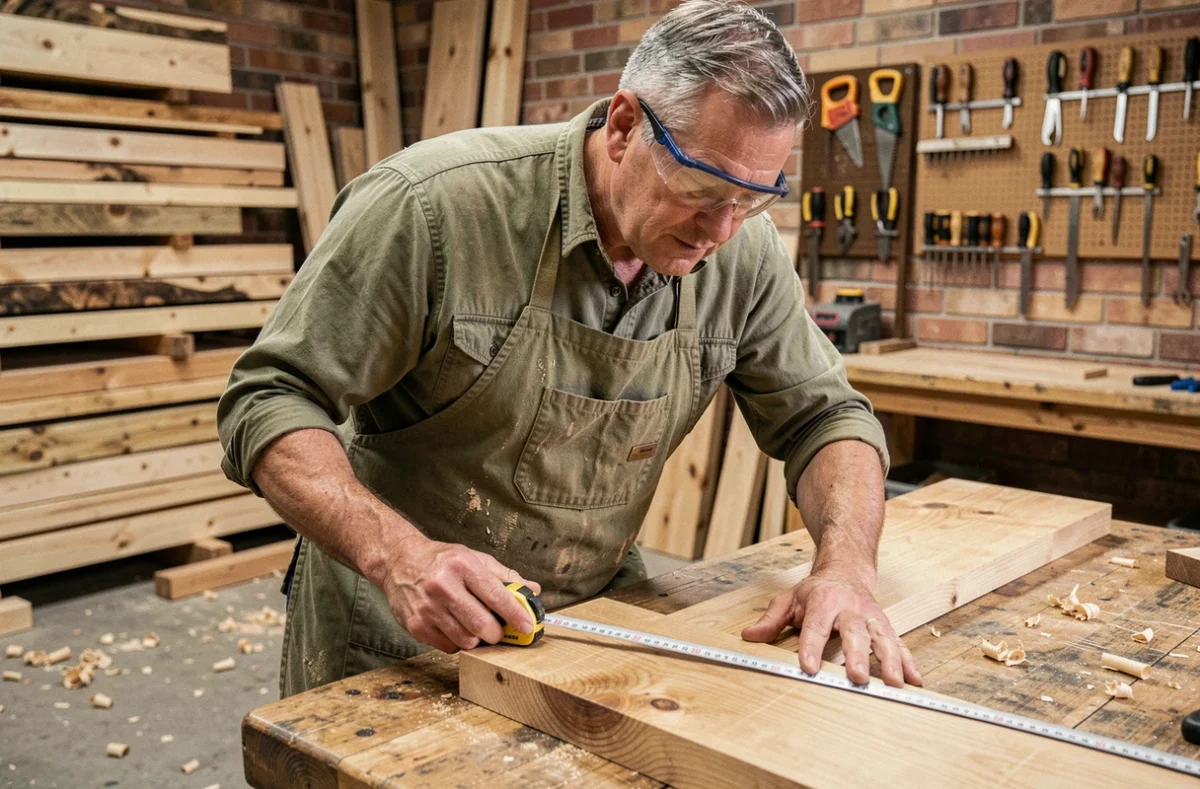
Replacing a window, installing a built-in closet, or fitting new shutters falls under custom carpentry, but each intervention comes with constraints that the DIY enthusiast or project owner often discovers too late. Urban planning, thermal performance, air tightness: these topics determine the success of a carpentry project well before the choice of wood species or type of glazing.
Urban Planning and Custom Carpentry: The Formality That No One Checks Early Enough
The replacement of a carpentry element is exempt from administrative formalities only when it is strictly identical to the existing one. As soon as a modification occurs (color, material, glazing partition, dimensions, addition of an exposed roller shutter box), a prior declaration of work may be required.
In protected areas, the opinion of the Architects of the Buildings of France applies. This concerns the perimeters around historical monuments, remarkable heritage sites, and certain areas covered by a strengthened local urban planning plan. Starting the manufacturing of a custom carpentry piece without having checked this point exposes one to costly compliance measures, or even an obligation to remove it.
For projects carried out in co-ownership, the constraint is double: the co-ownership regulations may impose a specific model, color, or material on the street side. Consulting the property manager and the urban planning department of the town hall before any order remains the most reliable approach.
If you wish to delve into the technical specifics of a carpentry project carried out according to the rules, it is useful to learn more at menuiserie-airaines.fr before finalizing your specifications.

Thermal Performance of Carpentry: Beyond the Uw Coefficient
The common reflex is to compare carpentry solely on their thermal transmission coefficient (Uw). A low number is reassuring, but it only tells part of the story.
Within the framework of RE2020, the performance of a new building is evaluated globally. The carpentry must be coordinated with the thermal study of the dwelling, taking into account solar gains, summer comfort, air permeability, and the carbon impact of materials. A window that performs well in insulation but is poorly oriented can degrade summer comfort or skew the overall energy balance.
The INIES Database, a Reference for Material Selection
When the project falls under the scope of RE2020, the carpentry must have verified environmental data. The INIES database centralizes the environmental declaration sheets of construction products. Checking the presence of the product in this database before ordering helps avoid a blockage during the final work certification.
For renovations, the requirements differ, but the reasoning remains the same: a custom carpentry piece should not be chosen based on a single isolated technical criterion. The type of glazing, the frame material (wood, aluminum, PVC, mixed), the installation method (surface-mounted, tunnel, rebate), and the orientation of the opening form a set where each parameter influences the others.
Air Tightness and Ventilation: The Trap of Overly Hermetic Installation
Improving the air tightness of a dwelling by installing very high-performance new carpentry seems logically beneficial. Field feedback diverges on this point when the existing ventilation is not adequate.
A tighter installation must remain compatible with the air renewal of the dwelling. An older dwelling equipped with natural ventilation or an outdated single-flow mechanical ventilation system may, after window replacement, experience condensation, mold, or degradation of indoor air quality. ADEME recommends integrating the ventilation question from the design phase of the carpentry project.
Points of Caution During Installation
The quality of the installation affects both the final performance and the quality of the product itself. Several elements deserve particular attention:
- The peripheral sealing (compression seals, impregnated foams, sealing membranes) must ensure continuity without thermal bridges or unwanted air passage.
- The regulatory air inlets on the carpentry, often forgotten during renovations, must be sized in coherence with the dwelling’s ventilation system.
- The sill and window support must drain water without infiltration towards the frame, which requires checking the level and slope before securing the frame.
A qualified carpenter systematically checks these points. In self-construction or installation by a non-specialized worker, these details are the most frequent source of issues.
Wood, Aluminum, or PVC Carpentry: Choosing Based on the Actual Project
The choice of material structures the budget, durability, and maintenance of a custom carpentry piece. The three main families (wood, aluminum, PVC) present distinct profiles, and mixed solutions (notably wood-aluminum) add a layer of complexity.
- Wood offers excellent natural thermal insulation and a favorable carbon balance but requires regular maintenance (stain or paint) whose frequency depends on exposure.
- Aluminum allows for slim profiles that maximize glazed surface area, with high durability and almost no maintenance, however, its thermal performance heavily depends on the quality of the thermal break.
- PVC remains the most accessible material in terms of price, with good insulation performance, but its aesthetic and dimensional possibilities are more limited for large custom sizes.
- Mixed wood-aluminum carpentry combines insulation and weather resistance, at the cost of significant additional expense and a thicker profile.
The ideal material depends on the precise configuration of the project: exposure, urban planning constraints, long-term maintenance budget, and dimensions of the openings. A decision based solely on the initial purchase price rarely yields the best long-term result.
Considering Maintenance from the Design Stage
In custom carpentry, future maintenance should weigh as heavily as the initial quote in the decision. A poorly maintained wooden carpentry piece degrades within a few years, while low-quality PVC can yellow or warp under strong solar exposure. Including the maintenance cost over ten or fifteen years in the comparison of quotes often changes the hierarchy of options.
The last point not to overlook concerns the traceability of materials and the ten-year warranty of the installer. A custom carpentry piece installed without the professional’s ten-year insurance certificate leaves the project owner alone in the face of any potential issues, regardless of the care taken in manufacturing.