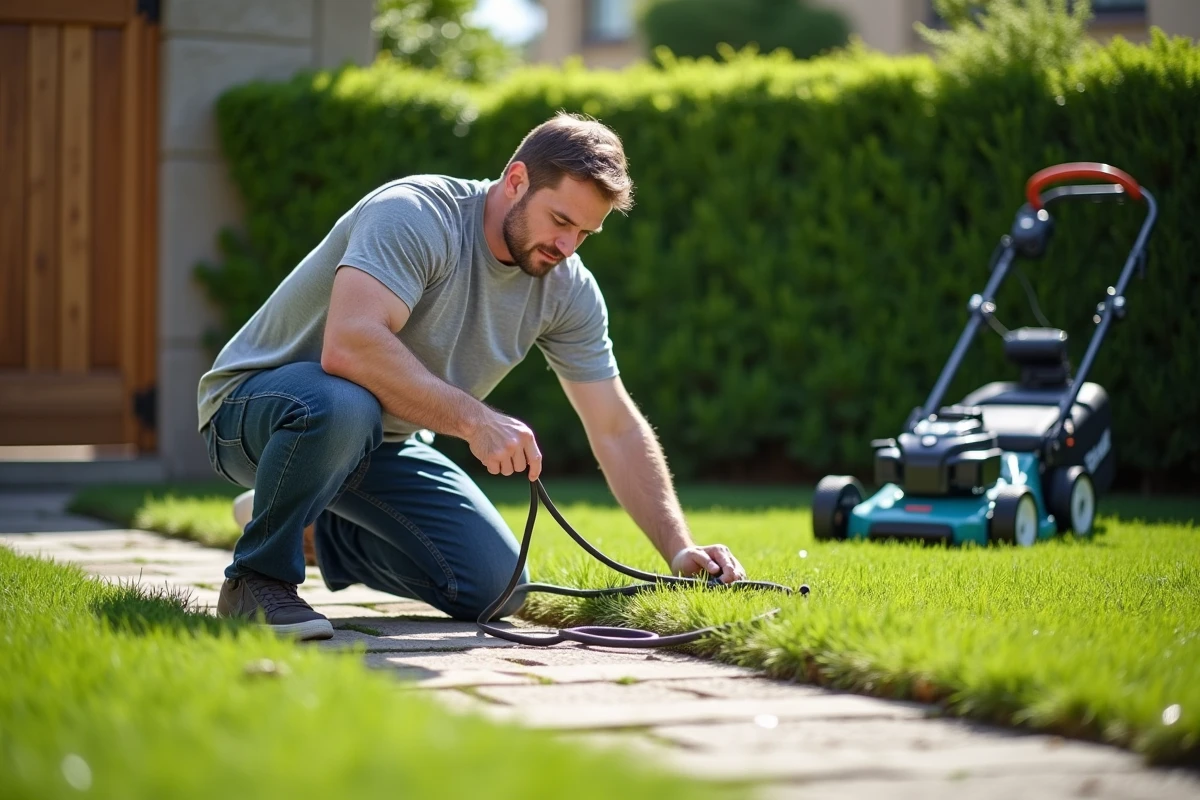
A poorly managed electric cord spares no one: it turns a mundane lawn mowing into a test of vigilance. Encountered in the wrong place, it multiplies risks, slows down every movement, and can, with a single blade strike, interrupt the session. Yet, many gardeners still underestimate the impact of a simple misaligned cable, neglecting safety advice in favor of speed.
The positioning of the cable is not just about the length or quality of the extension cord. It all starts with anticipating each trajectory, managing crossings, and adapting the layout to the terrain’s relief. Just a moment of relaxation, and the chore takes on the appearance of a puzzle, or even turns into an incident that could have been avoided much more simply.
The challenges of the electric cord during mowing: what you need to know
As soon as you grasp an electric lawn mower, vigilance becomes the name of the game. The cord demands attention, or else a misstep could occur: a misplaced loop, and the blade can sabotage everything, including the machine. Keeping the extension cord clearly visible, never caught under the grass or tangled in a flowerbed, is the real challenge. It’s impossible to let yourself be distracted by the garden’s ambiance.
The choice of the connection point matters. Installing the electrical outlet at a reasonable distance from the start, avoiding unnecessary back-and-forths, limiting knots and twists—each precaution extends the life of the cable. Some prefer to pull out the entire extension cord before starting; others move forward meter by meter, closely following the progress of the mower. Each has their method, depending on the green area or the surprises of the terrain.
For those who want to go further, the specialized site provides all the useful tips here: using an electric cord for mowing. Nothing replaces a careful check of the cable: see if knots are threatening, ensure the connectors are in good condition, and keep the cord away from puddles and damp areas. When navigating around trees, rose bushes, or thick grass, caution remains the best ally.
It is essential to avoid wrapping the cord around the machine or forcing the extension to gain a few steps. Always prefer wide and measured movements, keeping the cable behind the mower, never in front. Every turn or curve should be anticipated rather than corrected on the fly.
How to avoid common pitfalls and secure your mowing?
Better managing the electric cord during mowing helps avoid many concrete troubles: cable breakage, bad falls, problems with the electrical outlet due to a misstep. On the day you set up your extension cord, choose a model compatible with the power of the electric mower and long enough to reach everywhere without excessive tension. Models with thick sheathing better withstand repeated stresses.
On the ground, the organization of the cable’s path determines the efficiency of the operation. Start mowing from the area farthest from the outlet to avoid crossing the cord under the machine on the way back. Before even plugging in, identify each flowerbed, outdoor furniture, low-hanging branches, or forgotten stones: anticipating these obstacles helps keep the cable intact and the mowing smooth.
Some practices enhance safety and comfort:
- Unroll the entire extension cord before the first cut to avoid overheating and treacherous knots.
- Keep the cable always in your line of sight, well ahead of the blades, and behind the progression.
- Inspect the condition of the cord, outlets, and connectors after each session; visual checks prevent many surprises later.
If your setup includes a perimeter cable, especially for a mowing robot or sector delimitation, the installation must be meticulous. Follow the contours exactly, secure the cable without slack, adjust the tension so it hugs the ground without sinking or floating; this is the key to sustainable operation. This allows both the robot and the mower to navigate smoothly, regardless of the terrain’s little quirks.

Installing and using a perimeter wire for a mowing robot: instructions and tips
The perimeter wire is essential for guiding a mowing robot accurately. There’s no room for improvisation in this layout: start by creating a precise plan of the lawn, locate each area to be mowed, those to be avoided, tight spots, and every obstacle the robot must ignore. The wire should closely follow the borders, mirroring the contours of the terrain.
To securely anchor the cable, use suitable stakes and place them at regular intervals. Not too tight to avoid breakage, nor too loose to risk the robot getting stuck. Always maintain a consistent distance from flowerbeds or paths, strictly following the manufacturer’s instructions. For sharp angles, opt for gentle curves: most robots struggle to negotiate a sharp turn without hesitating or losing the wire.
To limit the hassles of false contacts, prefer continuous lengths of mowing robot wire; connectors should only be used as a last resort. Crossings, especially near the station, require attention and method. Sketching the route on paper or digitally before moving to the practical step simplifies everything, including any potential corrections to come.
Finally, regularly monitor the condition of the perimeter wire: wear, twisting, small snags from manual mowing or repeated passes—nothing beats a glance now and then to ensure the performance of the robot throughout the season. On the lawn side, the result speaks for itself, with no signs of neglected cables or unevenly trimmed edges. Maintenance becomes a game of balance and anticipation, and the lawn comes out on top.