
The kitchen of 2026 is no longer just about choosing colors or handles. Manufacturers and designers are reshaping their proposals around three technical axes: managing electrical power, reusing materials and appliances, and integrating active surfaces that contribute to the acoustic or thermal comfort of the room. These axes redefine how a kitchen project is conceived from the specifications stage.
Energy-efficient kitchens: limiting the power demand rather than consumption
Most discussions about energy efficiency in kitchens focus on the annual consumption of appliances. A different approach is gaining ground: sizing all equipment to reduce the maximum power demand at any given moment.
The principle involves coordinating the circuits of cooktops, ovens, water heaters, and dishwashers to avoid exceeding a given electrical subscription threshold. This logic is particularly relevant for households transitioning to photovoltaic self-consumption, where every peak kilowatt counts.
In practical terms, this translates into choosing induction cooktops with a power limiting mode, installing compact or low-energy convection ovens, and distributing circuits on the electrical panel designed from the conception phase. The Electricity Transport Network has identified this sizing trend as a lever to smooth out peaks in residential demand.
To follow all the news from Mon Blog Cuisine, this type of approach illustrates well the technical shift that culinary design is taking in France.
Reuse and second-hand kitchens: a sector that is structuring
Reuse in kitchens now goes beyond simply purchasing a second-hand piece of furniture on a classifieds platform. In France, the Network of Resource Centers and Recycling Centers has reported since 2023 a structuring of the offer for second-hand kitchen furniture (cabinets, countertops, facades), accompanied by design and installation services.
This offer changes the nature of the project. An individual can now order a complete kitchen reassembled from pre-used elements, with a follow-up comparable to that of a traditional kitchen designer.
Refurbished appliances with long warranties
On the appliance side, players like Envie or Back Market offer an increasing range of refurbished large appliances (ovens, cooktops, dishwashers) with warranties of up to three years. The 2023 impact report from Envie and that from Back Market published in March 2025 document this upgrade in refurbishment quality.
The interest goes beyond budget. Choosing a refurbished oven with a warranty also avoids the production of a new appliance and reduces pressure on raw materials. For a sustainable kitchen project, this lever is as significant as the choice of facade materials.
Bio-based materials and active surfaces for the kitchen
The trendy materials in kitchens are no longer limited to solid wood or laminate. Several manufacturers are incorporating surfaces with technical functions, capable of absorbing some ambient noise or regulating humidity in the room.
- High-density compressed wood fiber panels, used in the back of cabinets or as splashbacks, improve the acoustics of an open kitchen connected to the living room, a point rarely addressed in standard projects.
- Countertops made from composite materials incorporating bio-based binders (plant resins, recycled mineral fillers) offer an alternative to petrochemical resins, with comparable resistance to impacts and stains.
- Reused wood facades, sanded and refurbished, allow for the preservation of the aesthetic of natural wood while adhering to a circularity logic.
The choice of material becomes a trade-off between technical performance, environmental impact, and ambiance. An acoustic panel at the back of a cabinet may not be visible, but it radically changes the comfort of an open space where cooking and conversation occur.
Kitchen design 2026: what colors and shapes convey
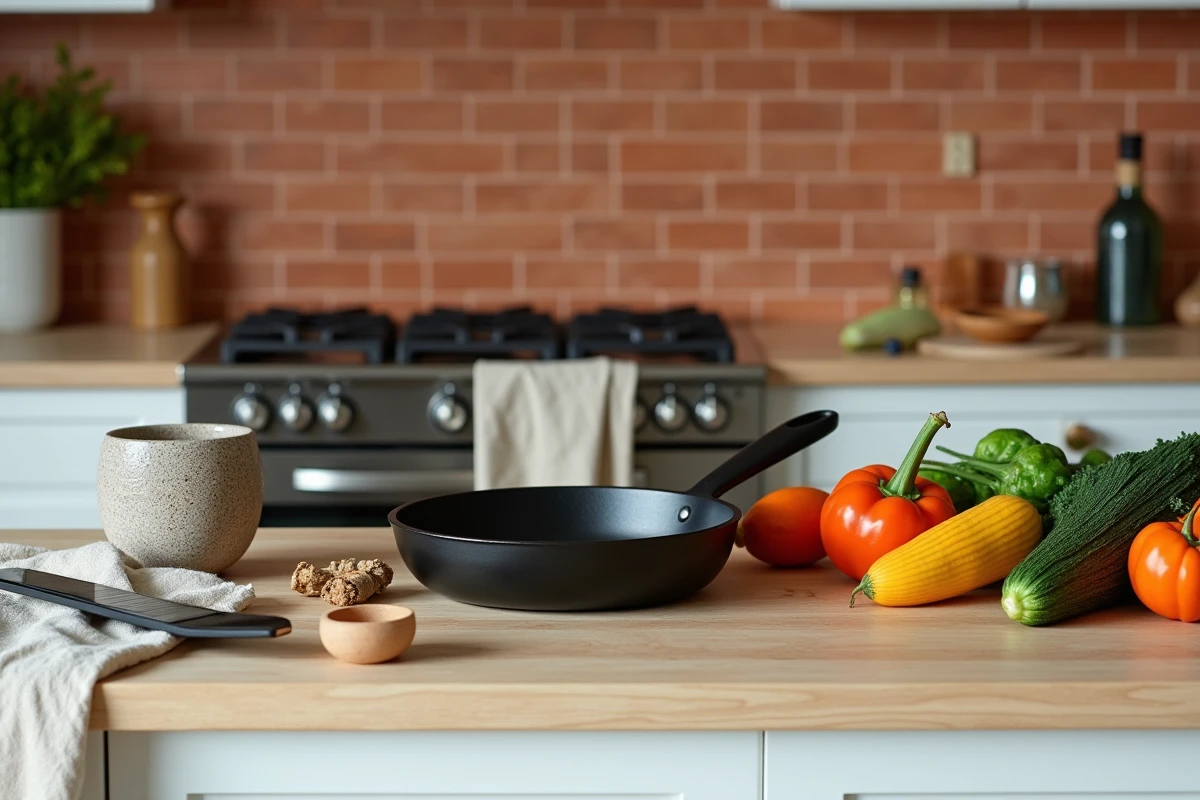
The color palettes announced for 2026 converge towards muted and earthy tones: terracotta, sage green, stone beige. This is not just a passing trend. These shades accompany an underlying trend towards kitchens designed as true living spaces, where the visual ambiance must endure over time without becoming tiresome.
Rounded shapes on islands, furniture corners, and handles are becoming widespread. Their function is not solely decorative: a rounded corner reduces impacts in a densely trafficked area, and an island with curved edges facilitates movement in a kitchen open to the dining room.
Storage and appliances integrated into the design
The trend of concealing appliances behind uniform facades continues. Hoods integrated into the countertop or ceiling, refrigerators dressed in the same facade as storage columns, retractable outlets: each technical element blends into the decor.
This integration requires more in-depth design work upfront. The electrical plan, ventilation, and maintenance access must be anticipated before choosing the style of the facades, not after.
- Plan for access hatches to integrated hood filters right from the cabinet plan.
- Ensure that the depth of the cabinets allows for the complete integration of the chosen large appliances.
- Anticipate the routing of ventilation ducts if the hood is mounted on the ceiling.
The kitchen of 2026 is distinguished by the importance it gives to technical constraints from the very first sketches of the project. Design follows engineering, not the other way around. A successful project integrates energy efficiency, reuse, and acoustic comfort even before choosing a facade color.