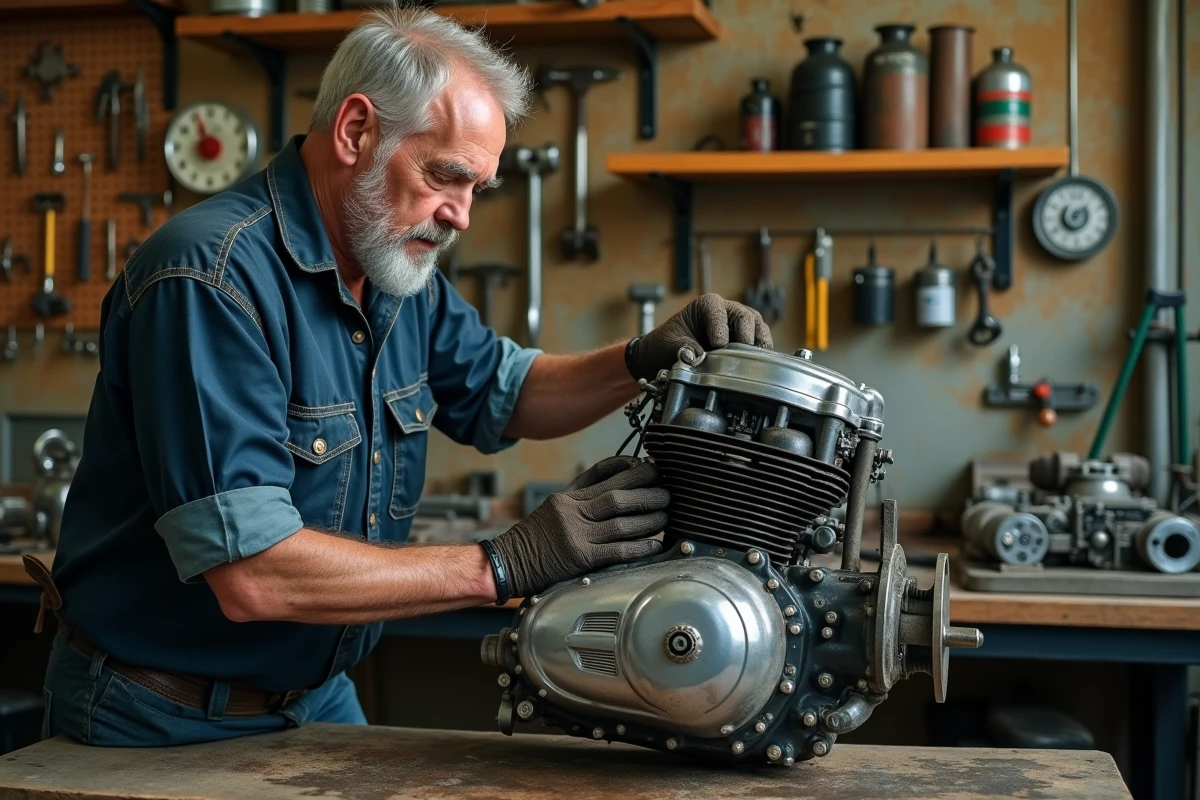
On a gathering parking lot, you often hear the same question between two owners of Touring or Softail: “Have you had any issues with your 103?” The answer varies depending on the model year, maintenance performed, and especially the actual use of the motorcycle. The Harley 103 engine, or Twin Cam 103, has equipped a large part of the Harley-Davidson range since 2012. Its reputation swings between robust mechanics and a few sensitive points that every second-hand buyer should know before signing.
Torque compensator and primary chain: the real topic of the Twin Cam 103
Harley forums are full of discussions about specifications and power, but the point that distinguishes a well-maintained 103 from a problematic 103 often lies with the torque compensator. This mechanism, housed in the primary case, absorbs the jolts of the V-twin at idle and low RPM. When it starts to wear out, a characteristic metallic clunk can be heard at startup or during deceleration.
Replacing the compensator is not a trivial operation. You need to open the primary, remove the clutch, and the labor cost quickly rises if you don’t do it yourself. For models produced between 2012 and 2016, feedback varies on this point: some owners ride tens of thousands of kilometers without noise, while others notice the clunk before reaching half that distance. The quality of the primary oil and the regularity of oil changes play a direct role.
You can consult a detailed report on the reliability of the Harley 103 engine according to Auto Mechanic Info, which compiles several testimonials from owners on this specific topic and other points of concern.
Maintenance of the Harley 103 engine: the intervals that really matter
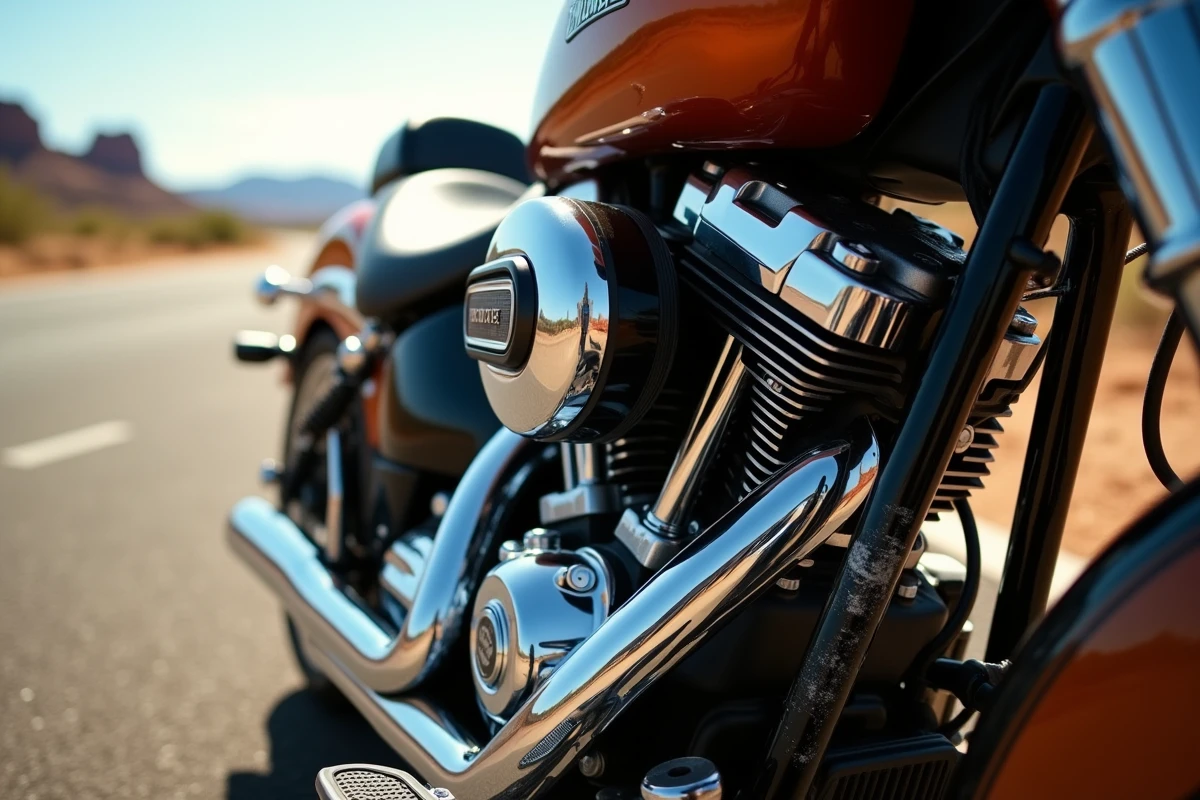
An air-cooled Twin Cam 103 does not tolerate negligence regarding fluids. We talk about three distinct circuits: engine oil, primary oil, and transmission oil. Each has its own case and its own oil change interval. Confusing the three or spacing out oil changes beyond reason opens the door to premature wear.
The three oil changes not to confuse
- Engine oil lubricates the V-twin itself. With mixed use (highway and city), it is generally changed every season or at regular intervals based on mileage.
- Primary oil feeds the primary chain and the compensator. It degrades faster than one might think, especially in summer with the heat from the air-cooled engine.
- Transmission oil protects the six-speed gearbox. A level that is too low causes rough shifting, a symptom often confused with a gearbox defect.
Not mixing oils between the three cases is a basic rule, but we regularly come across second-hand motorcycles where the previous owner used the same oil everywhere. This shortcut degrades the protection of the compensator and accelerates clutch wear.
Harley 103 vs 96 ci: what the upgrade changes in real use
The comparison between the Twin Cam 96 and the Twin Cam 103 comes up systematically among second-hand buyers. On paper, the 103 offers a larger displacement thanks to a wider bore. In practice, the gain is mainly felt in low RPM acceleration, exactly where a Harley-Davidson V-twin spends most of its time.
The 96 ci is not a bad engine. It equipped Softail, Touring, and Dyna models before the arrival of the 103, and its overall reliability is well documented. The 103 retains the same Twin Cam architecture with targeted mechanical adjustments. We are not talking about a complete redesign but an evolution.
Where the difference is felt
On the highway, loaded with a passenger and full saddlebags, the 103 breathes better than the 96. The additional torque avoids straining the gears and reduces vibrations at stabilized speed. In the city, the gap is less pronounced. A Fat Boy in 96 ci and a Fat Boy in 103 ci handle very similarly in urban traffic.
The real criterion for choosing between the two is not raw power but the maintenance history of the desired motorcycle. A 96 ci with a complete service record and rigorous oil changes is worth more than a 103 ci with an unknown mechanical past.

Points of caution for a second-hand Twin Cam 103 purchase
Before putting down a deposit on a Touring Street Glide or a Softail Heritage equipped with the 103, a few checks are necessary beyond just a test ride.
- Listen to the engine cold at startup: a regular clunk during the first few seconds indicates a tired compensator. The noise often disappears when hot, which can mask the problem during a quick test.
- Check the level and color of the primary oil. Thick black oil indicates a lack of maintenance. On an air-cooled engine, heat degrades fluids faster than one might imagine.
- Ask for invoices for the three separate oil changes. If the seller does not distinguish between engine oil, primary, and transmission, it is a warning sign regarding the overall maintenance quality.
- Inspect the primary case and cam cover gaskets. Oil seepage is common on aging Twin Cams and does not always pose a serious problem, but it allows for price negotiation.
The Twin Cam 103 remains a solid engine when its maintenance is taken seriously. The Dyna, Softail, and Touring models equipped with it continue to run with high mileages, provided that the three oil circuits have been respected and that the compensator has been monitored. A well-maintained 103 has nothing to envy from more recent engines for touring or cruising use, and its acquisition cost on the second-hand market makes it particularly accessible.