
Trimming a hedge is not just about running a tool along a green wall. Each cut affects the physiology of the shrub: it redirects the sap, stimulates or inhibits buds, and alters the density of the foliage. Understanding this mechanism allows you to trim your hedges at the right time, with the right technique, without weakening the plants.
Physiological reaction of the hedge after a cut
When a branch is cut, the plant activates its dormant buds located below the cut point. This phenomenon, known as apical dominance reversal, causes lateral branching that densifies the foliage. It is precisely this reaction that gives trimmed hedges their compact appearance.
Not all species react in the same way. Hornbeam or beech easily branch out after a clean cut. However, laurel or thuja do not tolerate repeated cuts on old wood well. Several local studies, including the Guide to Gentle Pruning published by Angers Loire Métropole in 2023, highlight the risk of decline in these sensitive species when they are sculpted in a strictly geometric manner too often.
The rule to remember: frequent cuts on green wood stimulate, severe cuts on hard wood stress. Adapting the intensity of the pruning to the species avoids bare spots that can take several seasons to fill.
To choose a tool suitable for the thickness of the branches and the type of hedge, the references available on sculpte-haie.com allow for comparison of the technical characteristics of different models.
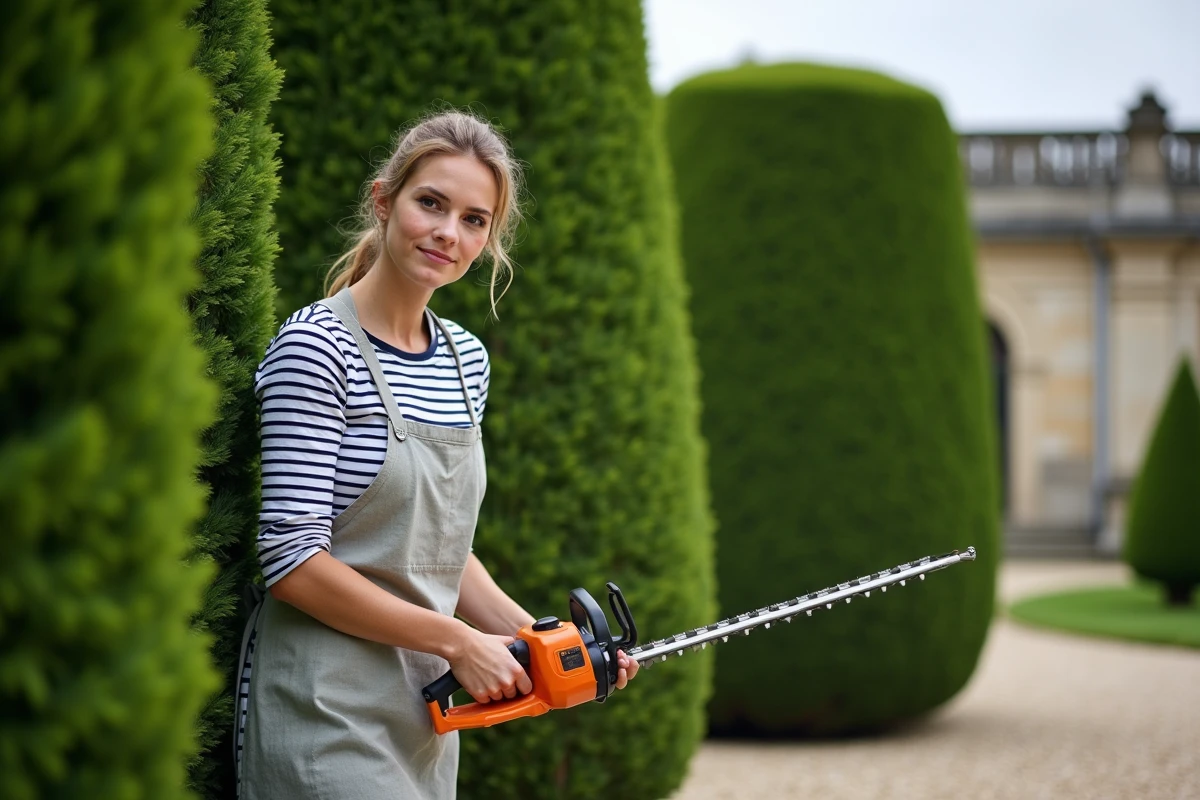
Hedge trimming period and regulatory constraints on nesting
The trimming calendar depends as much on plant biology as on law. French regulations, via Article L.411-1 of the Environmental Code, prohibit the intentional destruction of nests of protected species. The DDT(M) have reminded since 2022-2024 that trimming a hedge occupied by nesting birds can constitute an offense.
Several prefectures have formalized this requirement. The Gironde Prefecture, in a 2023 statement, officially recommends to concentrate trimming outside the period from mid-March to the end of August, even for private hedges.
Trimming windows according to the type of hedge
- Deciduous hedges (hornbeam, beech, field maple): first trim in February before bud break, second trim possible in September once nesting is finished
- Evergreen hedges (yew, boxwood, laurel): main trim in June if no nest is present, light touch-up in September to maintain shape before winter
- Flowering hedges (forsythia, weigela, deutzia): trim just after flowering to avoid removing next year’s buds, always checking for the absence of active nests
Before any intervention, a quick visual inspection of the hedge is often enough to spot nests. The Tree Charter of the City of Rennes (2024 version) includes specific recommendations to guide individuals in this verification.
Trapezoidal or rectangular shape: impact on hedge health
The shape given to the hedge is not purely decorative. It determines the amount of light received by the base of the plant, and thus its ability to remain lush down to the ground.
A hedge trimmed in a trapezoid shape, wider at the base than at the top, exposes all the foliage to light. The base remains dense, and the lower branches do not become bare. This is the most suitable shape for hedges that need to remain opaque along their entire height.
The rectangular shape, visually sharper, is suitable for shade-tolerant species like yew or boxwood. On a thuja or cherry laurel, this geometry causes shading at the base, which eventually creates gaps in the lower foliage.
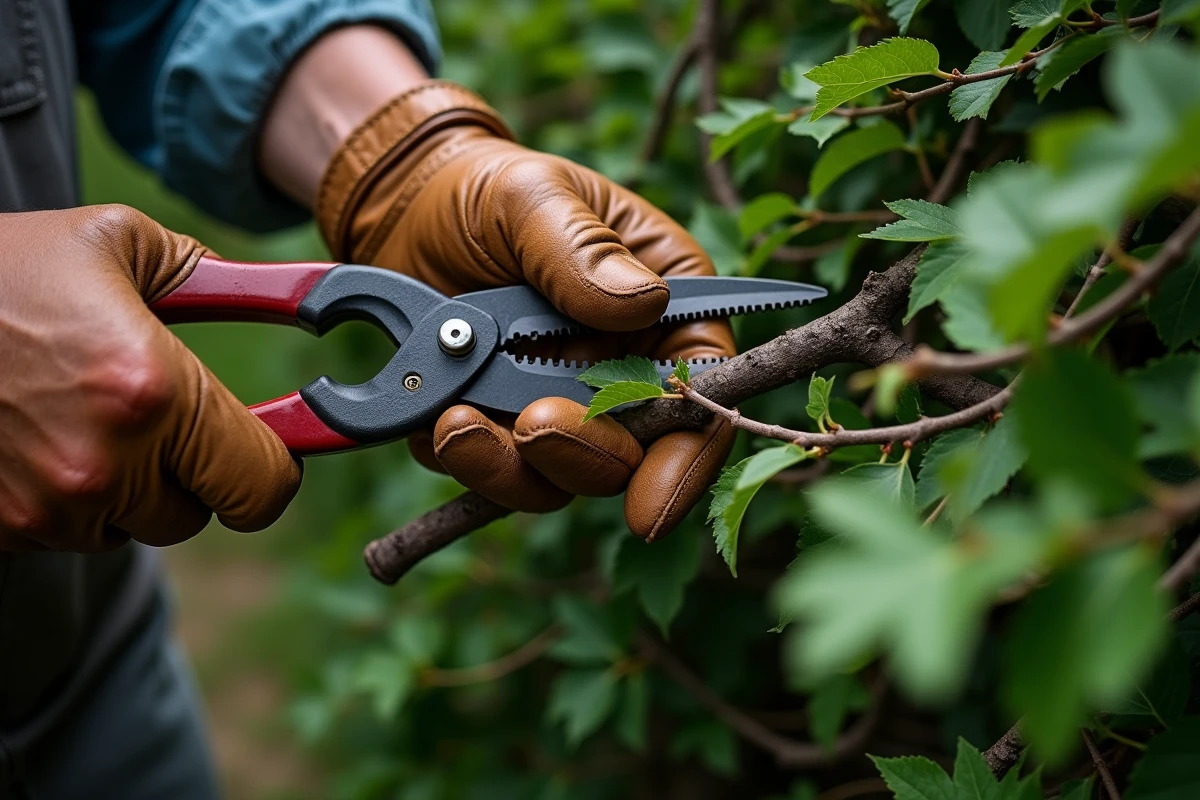
Cutting technique to maintain shape
Planting two stakes at each end of the hedge and stretching a line at the desired height remains the most reliable method for achieving a straight line. The cut is made from the bottom to the top in broad, regular strokes. On the sides, slightly tilting the blade inward (a few degrees angle) is enough to create the trapezoidal profile without additional markers.
For tall hedges, a pole hedge trimmer with an adjustable head offers better control than using a step ladder combined with a traditional tool. The weight of the tool and the battery life then become determining criteria for prolonged comfort of use.
Blade maintenance and cutting quality on branches
A dull blade crushes plant fibers instead of cutting them. The irregular wound dries more slowly, which encourages the entry of pathogenic fungi. Sharpening and disinfecting the blade before each trimming session protects the hedge as much as the proper timing of intervention.
- Clean the blade with methylated spirits after trimming a sick hedge, before moving on to another healthy section
- Sharpen with a flat file while respecting the original angle of the teeth, without using a grinder that overheats the metal
- Check the play between the two blades on an electric or battery hedge trimmer: excessive play will chop the twigs instead of cutting them cleanly
On battery models, power decreases towards the end of the charge. The last minutes of autonomy produce less clean cuts. It is better to stop and recharge than to finish a section with a tool that tears more than it cuts.
The choice between a corded electric model, a battery model, or a gas hedge trimmer depends on the length of the hedge to be treated and the average thickness of the branches. A cord limits the range, a battery limits the duration, and a gas engine adds weight. Each constraint directs towards a specific use, not towards a universally better tool.
The quality of a sculpted hedge ultimately depends on three mutually reinforcing parameters: respect for the vegetative cycle of the planted species, a cutting geometry adapted to its light needs, and a tool whose blade cuts without damaging. Neglecting any of the three will eventually show on the foliage.