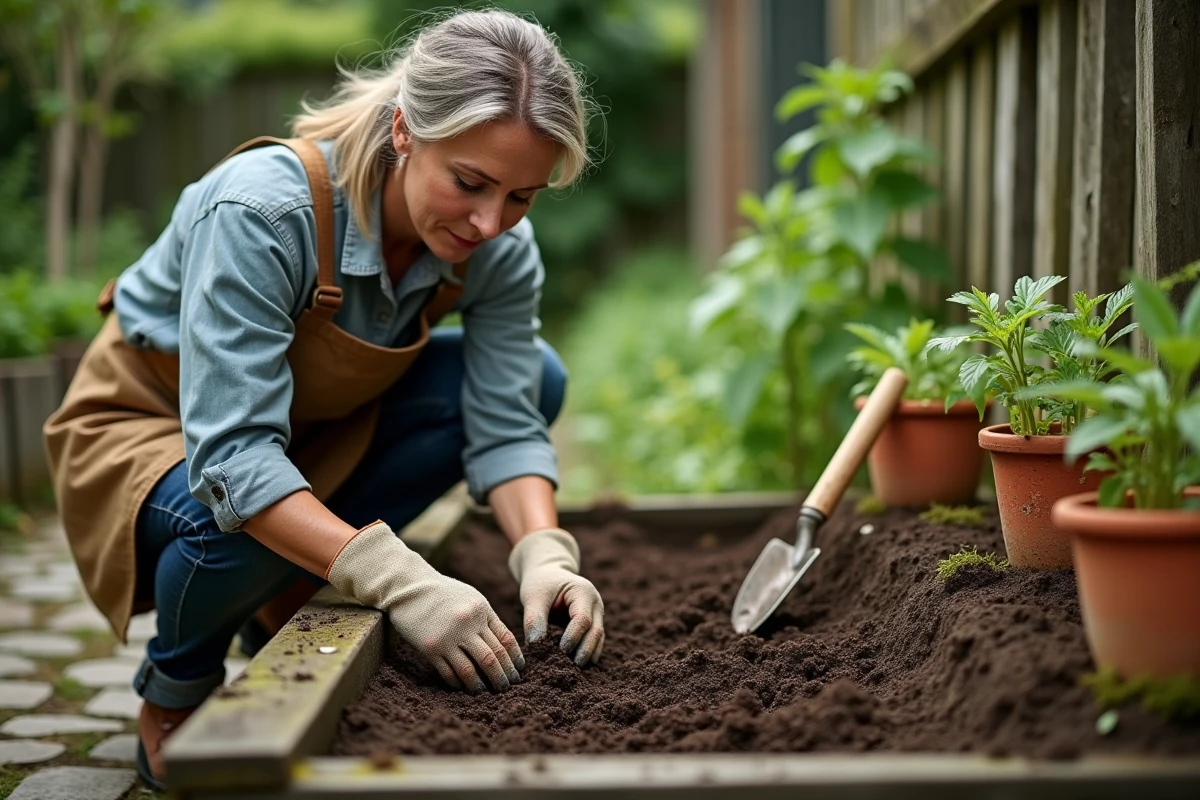
Maintaining a productive garden over twelve months does not rely on a series of seasonal gestures. The soil, its biology, and its ability to retain water form the foundation of all sustainable fertility. The repeated watering restrictions since 2022 in many French departments have accelerated a change in practices: permanent soil cover, reduced mechanical work, water recovery. These constraints, far from being a hindrance, lead to a more resilient garden.
Living soil and no-till: the basis of a fertile garden all year round
Most gardening guides start with the sowing calendar or the choice of varieties. The real starting point is the structure of the soil. A compacted soil, turned over each season with a spade or rototiller, gradually loses its porosity and microbial life.
Regenerative gardening practices, inspired by conservation agriculture, are based on a simple principle: no longer turn the soil and cover it permanently. BRF (fragmented branch wood), coarse compost, or a thick mulch protect the surface, nourish soil organisms, and limit evaporation. Unlike tilling, this approach promotes the network of tunnels created by earthworms, which ensures natural drainage and deep aeration.
For those who wish to deepen the organic management of their plot, the gardening advice on Terrre d’Humus details the organic matter contributions suitable for different types of soil.
However, no-till is not suitable for all situations. A very clayey and waterlogged soil in winter may require light surface scratching to avoid root asphyxiation in spring. Direct observation of the land remains the best guide: if water stagnates several days after rain, a punctual decompaction with a grelinette (without turning) is necessary.
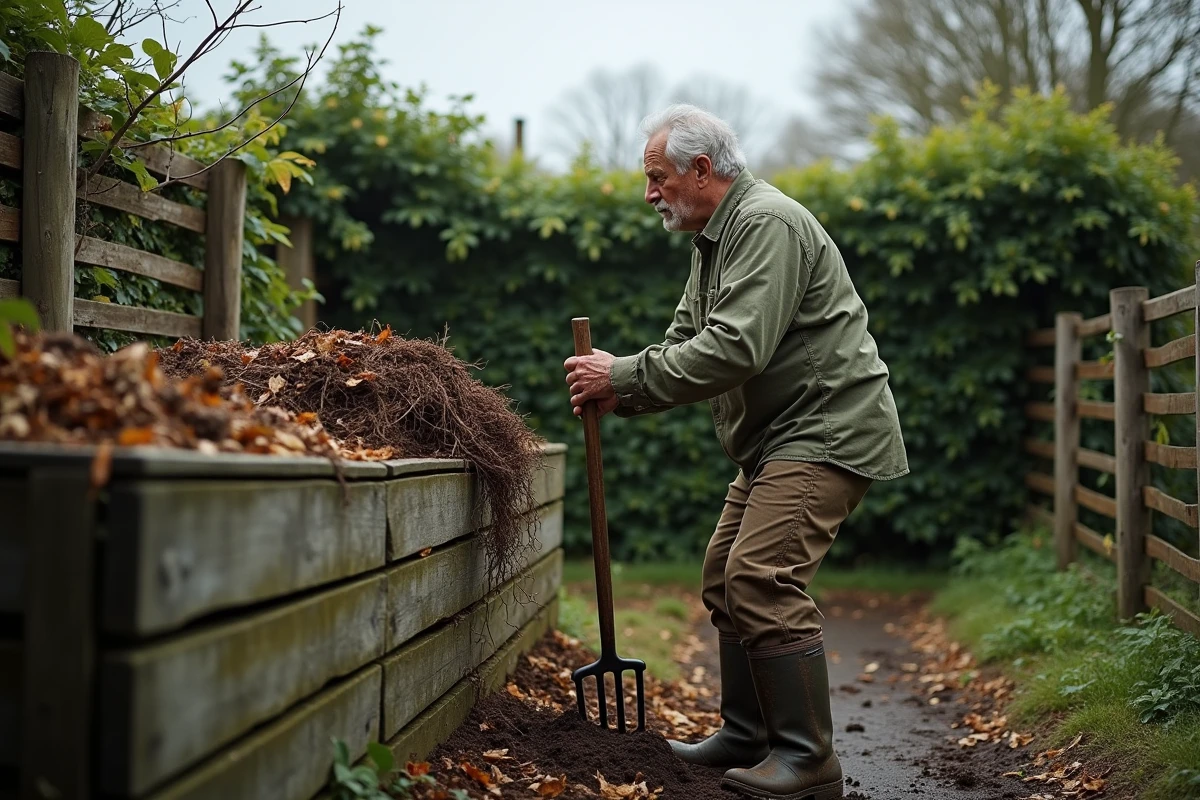
Garden watering and water restrictions: adapting techniques
Since the droughts of 2022 and 2023, drought orders severely limit the watering of private gardens in summer in many departments. The National Observatory of the Effects of Climate Change notes a significant increase in the duration and frequency of these restrictions. Watering less and better is no longer a choice; it is often a legal obligation.
Drip irrigation, placed at the base of plants under the mulch, significantly reduces water consumption compared to traditional sprinkling. Water reaches the root zone directly without wetting the foliage, which also limits the development of fungal diseases on vegetables and flowers.
Collecting and saving water in the vegetable garden
Rainwater harvesting via tanks connected to gutters remains the most accessible solution. Several local authorities also encourage the reuse of pre-treated domestic greywater for ornamental watering, although the regulatory framework varies by municipality.
- Mulch to a sufficient thickness (hay, straw, dead leaves) to maintain soil moisture even in the height of summer, which reduces the frequency of watering.
- Water early in the morning or late in the day, never in full sun, to limit evaporation and thermal stress on the plants.
- Install lightweight shade structures above sensitive crops (lettuce, spinach) during heat peaks to reduce the water needs of these species.
These combined techniques allow you to keep a productive vegetable garden even during restriction periods, provided they are implemented before the heat arrives.
Pollution of urban soils: an overlooked angle for vegetable garden health
Since 2023, several regional health agencies and local authorities have published specific recommendations for vegetable gardens in urban areas. City soils can contain heavy metals (lead, cadmium) or hydrocarbon residues, depending on the land’s history.
Having your soil analyzed before growing vegetables in the city is not an excessive precaution. Some soil analyses offered by agronomic laboratories now include an “urban pollutants” section in addition to the standard assessment (pH, organic matter, nutrients). When results reveal contamination, growing in raised beds with controlled substrate remains the best defense.
For an unpolluted garden in the ground, the standard agronomic assessment allows for adjustments to contributions: an excess of potassium or too acidic pH leads to specific corrective amendments rather than liming or blind fertilization.
Vegetation cover and rotation: maintaining fertility without chemical fertilizers
Bare soil is the enemy of fertility. Between two crops, sowing a green manure (mustard, phacelia, clover) protects the soil, captures atmospheric nitrogen for legumes, and nourishes soil fauna upon its destruction.
Alternating plant families from one season to the next breaks disease cycles and reduces pressure from specific pests. A vegetable garden where tomatoes return to the same spot every year will see soil pathogens accumulate, even with careful mulching.
- Legumes (beans, peas, broad beans) enrich the soil with nitrogen and make an excellent preceding crop for greedy leafy vegetables like cabbages or spinach.
- Alliaceae (garlic, onion, leek) have a cleansing effect on the soil and should follow crops sensitive to fungal diseases.
- Cucurbits (zucchini, squash) effectively cover the soil with their broad foliage, limiting the growth of weeds during the summer.
Rotation over three or four years, combined with permanent cover, maintains a biological balance in the soil that limits the need for treatments, including those allowed in organic farming.
A fertile garden all year round is built on fundamental choices: not leaving the soil bare, adapting watering to the actual constraints of the land and local regulations, checking the quality of your soil before planting. These practices require an initial investment in observation and organic matter, not in products.